
1. What is GPC3?
- Glypican-3 (GPC3) is a heparan sulfate proteoglycan bound to the cell surface via a glycosyl-phosphatidylinositol (GPI) anchor.
- Normally expressed in embryonic liver and placenta, but silenced in adult tissues.
- Re-expressed in HCC, making it a highly specific tumor marker.
- Overexpression promotes tumor growth via Wnt/β-catenin signaling and interaction with growth factors.
2. Anti-GPC3 Antibodies (Immune Response)
- In HCC, patients can develop autoantibodies against GPC3.
- These antibodies are detectable in serum, often before clinical diagnosis.
- Reported prevalence:
- Present in ~40–50% of HCC patients.
- Rare in healthy individuals or those with benign liver disease (specificity >90%).
- Clinical implication: Potential early detection marker when combined with AFP and DCP.
3. Diagnostic Applications
- ELISA-based assays have confirmed that anti-GPC3 antibodies correlate with:
- Early-stage HCC (smaller tumor burden).
- Cases missed by AFP alone.
- Multiplex panels (AFP + DCP + anti-GPC3 antibodies) achieve AUC >0.9 in some studies — much stronger than any single biomarker.
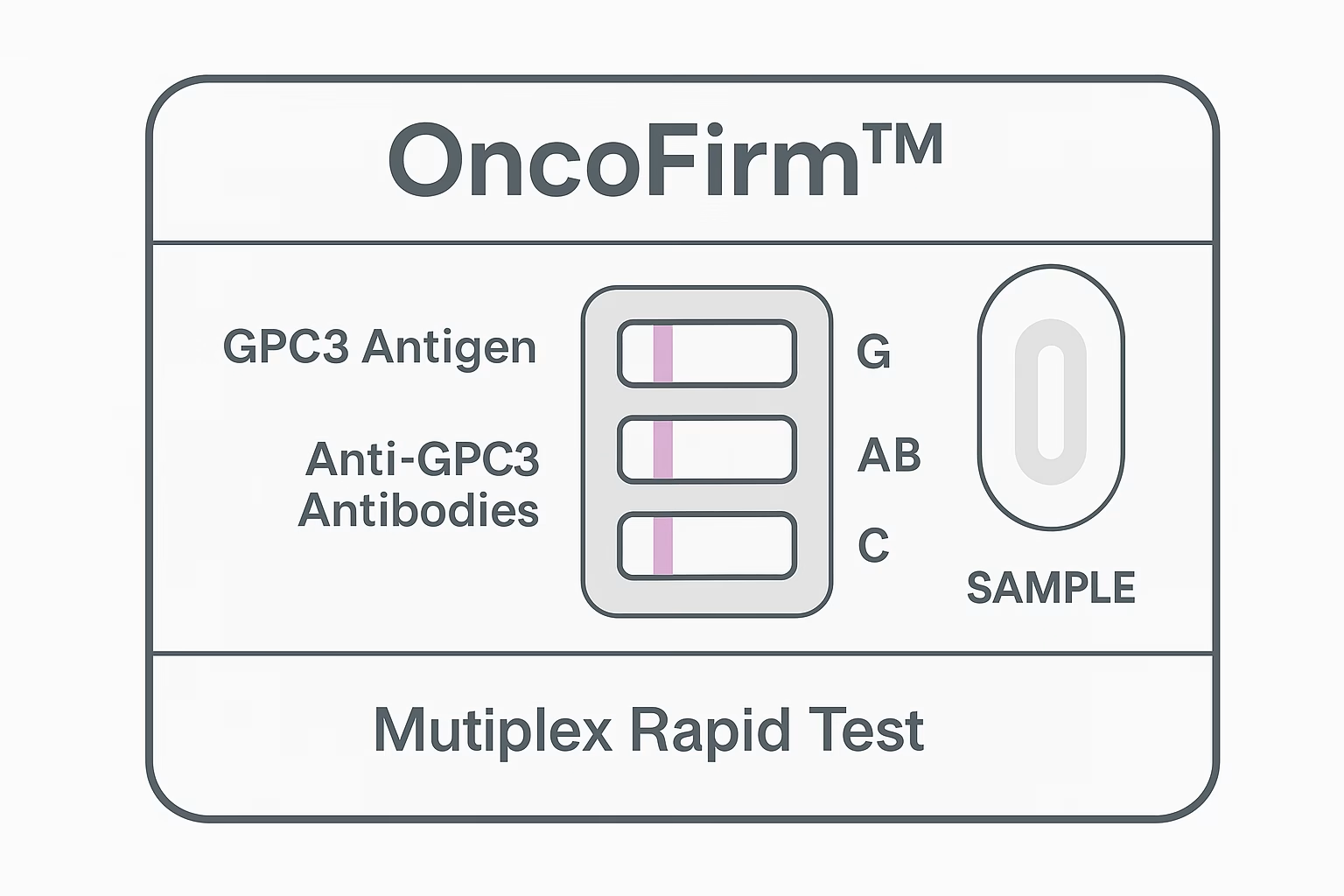
- Suitable for lateral flow rapid test design, where anti-GPC3 antibodies in blood can bind immobilized GPC3 antigen on a test strip.
4. Therapeutic Applications
- Monoclonal anti-GPC3 antibodies are being investigated as therapies:
- Codrituzumab (GC33): Humanized anti-GPC3 IgG2 monoclonal antibody.
- Mechanism: Triggers antibody-dependent cellular cytotoxicity (ADCC) against GPC3+ tumor cells.
- Clinical trials: Phase II studies in advanced HCC — modest single-agent efficacy, but potential in combination regimens.
- Antibody–drug conjugates (ADCs): Anti-GPC3 antibody linked to cytotoxins.
- Bispecific antibodies: Linking T-cells to GPC3+ cells to enhance immune killing.
- CAR-T therapies: T-cells engineered with anti-GPC3 receptors show promising preclinical results.
- Codrituzumab (GC33): Humanized anti-GPC3 IgG2 monoclonal antibody.
5. Research & Clinical Challenges
- Heterogeneity: Not all HCCs express GPC3. Some tumors remain negative.
- False negatives: Patients without immune response won’t produce anti-GPC3 antibodies.
- Therapeutic limitations: Monotherapy antibodies (like codrituzumab) showed limited overall survival benefit in unselected populations — biomarkers for patient selection are needed.
6. Future Outlook
- For Diagnostics: Anti-GPC3 antibodies could become part of next-generation rapid test kits for early HCC detection, especially in high-risk groups (HBV, HCV, cirrhosis).
- For Therapy: GPC3 remains one of the hottest immunotherapy targets in HCC, with ongoing studies in CAR-T, bispecific antibodies, and ADCs.
- For OncoFirm™: Integrating anti-GPC3 antibody detection into a multiplex lateral flow assay (AFP + DCP + GPC3 antigen + anti-GPC3 antibodies) could create a unique early-diagnostic platform.
Key Takeaways
- Anti-GPC3 antibodies = autoantibodies produced by HCC patients, detectable in blood.
- Useful for early detection, complementing AFP and DCP.
- Therapeutically, anti-GPC3 monoclonals (e.g., codrituzumab) and CAR-T cells are in trials.
- High specificity (rare in non-HCC), making it an excellent diagnostic biomarker candidate.
https://medlineplus.gov/genetics/gene/gpc3
#Anti-GPC3Antibodies #HepatocellularCarcinoma
